


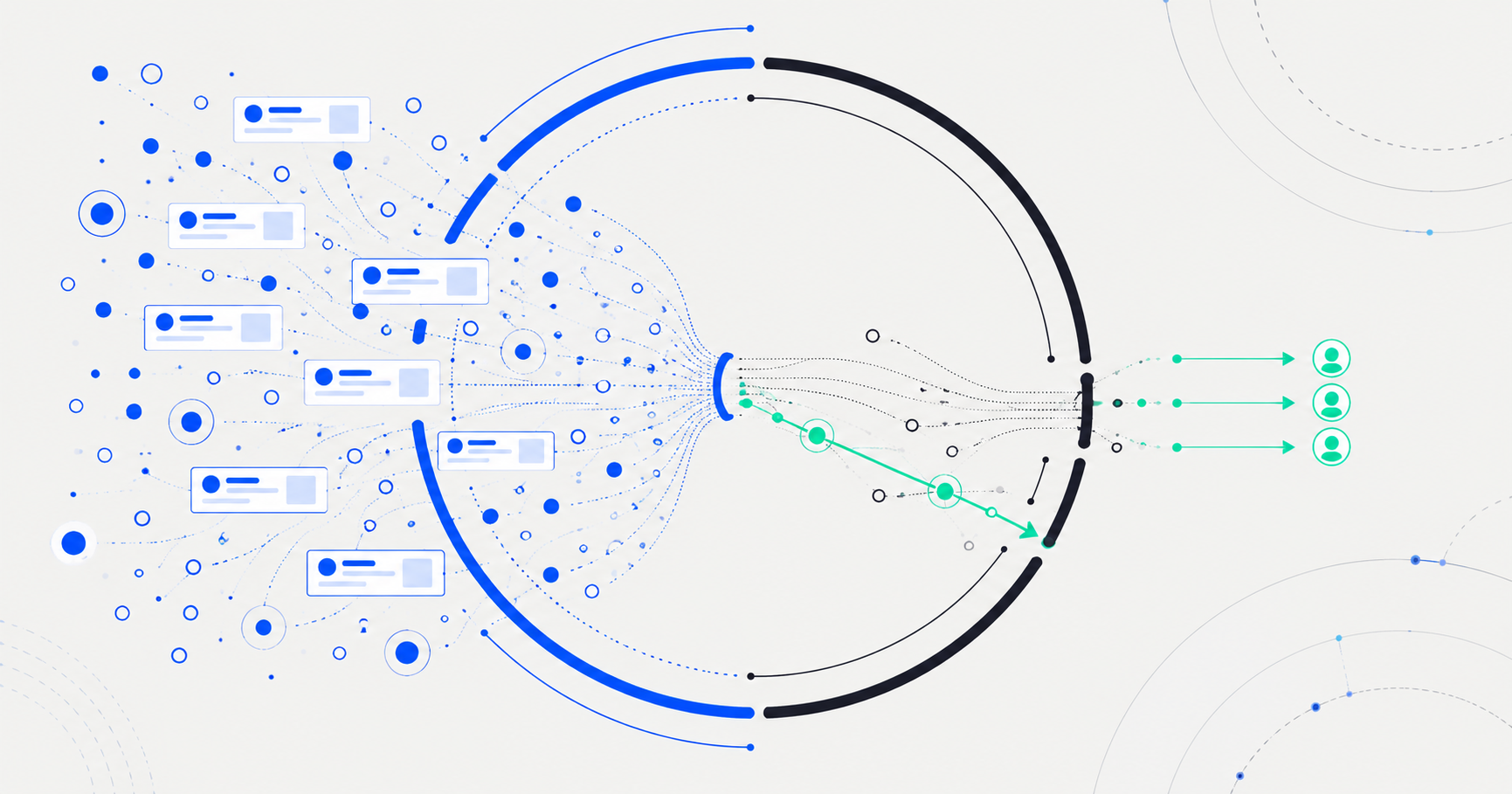
More search impressions with flat clicks do not automatically mean your SEO is failing. They mean Google is showing your pages more often, but the additional visibility is not producing proportional visits yet.
That distinction matters. A site can gain impressions because it entered new query groups, began appearing in more countries, expanded onto mobile results, or moved from no visibility to lower positions where few users click. In those cases, a declining sitewide click-through rate may accompany genuine expansion. The same pattern can also reveal weak titles, irrelevant queries, changed search-result layouts, or a page that no longer matches what searchers expect.
The wrong response is to rewrite every page because one aggregate metric moved. Before changing content, identify which pages, queries, devices, countries, and search appearances created the gap.
Start with what Search Console actually measures
Google Search Console defines impressions as the number of times a result from your site was seen in Google Search, clicks as visits initiated from those results, and CTR as clicks divided by impressions. Its Performance report can group data by query, page, country, device, date, and search appearance.
Google’s Performance report documentation also explains that chart and table totals can differ because data may be aggregated at the property or page level. This is one reason a single sitewide percentage should not drive a content decision.
Begin with a comparable period. Review weekly or monthly data when you need to smooth daily volatility, and compare the current period with the preceding period or the same period in the previous year when seasonality may matter. Exclude the newest preliminary data if it could distort the conclusion.
Then separate branded and non-branded queries. A change in searches for the company name can move CTR substantially without revealing anything about the performance of service and educational content. Branded demand and discovery demand answer different questions and should be evaluated separately.
This is also why searching your own keywords manually cannot diagnose the problem. Our guide to why manual rank checking fails explains how location, device, personalization, and timing make an individual result a poor substitute for aggregated performance data.
Four different patterns can produce the same CTR decline
The same sitewide graph can hide opposite situations. Review the data at page and query level and look for one of these patterns.
Impressions rise while average position becomes weaker
The page may be appearing for more queries, but many of those new impressions occur farther down the results. That can be an early expansion signal rather than a loss. Check whether clicks from the original high-value query group remain stable before treating the lower CTR as damage.
Position is stable while clicks fall
If the important query, page, device, and country remain comparable, the result itself may have become less compelling or the search-results page may have changed. Review the title link, snippet, competing results, rich results, ads, local features, and the dominant answer format now shown for the query.
Impressions grow for queries the page should not own
The page may be semantically broad enough to appear but not specific enough to satisfy the new audience. This is an intent problem, not merely a title problem. Determine whether the page should be repositioned around its original purpose, expanded to serve the new decision, or supported by a separate page with a genuinely distinct role.
The decline exists only in one segment
A mobile-only decline can point toward an uncompetitive mobile snippet or a poor post-click experience. A country-specific decline may reflect language, localization, availability, or a different competitive set. A change limited to one search appearance should not be generalized to the whole site.
Google’s guide to debugging Search traffic drops recommends comparing queries, pages, countries, devices, and search appearances before drawing conclusions. That segmentation is the difference between a diagnosis and a guess.
Improve the result only after confirming the page still satisfies the query
A higher CTR cannot rescue a page that answers the wrong question. First inspect the leading queries for the page and ask:
- Does the visible content directly answer the decision behind those queries?
- Is the page type appropriate: service page, guide, comparison, checklist, case study, or tool?
- Does the title promise what the page actually delivers?
- Is the page current, specific, and more useful than a generic summary?
- Does the next action match the visitor’s stage of awareness?
If the answer is no, fix the purpose and content before polishing metadata. A click earned through a misleading title is not an SEO win if the visitor immediately discovers a different page than expected.
If the intent is aligned, review the title link. Google’s title-link guidance recommends descriptive, concise titles and warns against vague text, unnecessary repetition, and keyword stuffing. Google can generate the displayed title from several sources, including the title element, visible heading, prominent on-page text, anchor text, and other references.
Keep the title element, H1, visible topic, and internal anchors consistent. When they describe different things, changing only the metadata may not produce the title you expect.
Snippets are query-dependent, not fixed advertising copy
The meta description can influence the snippet, but Google does not promise to display it. According to Google’s snippet documentation, snippets are primarily generated from page content and may vary for different queries. Google may use the meta description when it provides a more accurate summary.
Write a unique description for the page, but also make the answer visible in the content. A strong opening section should quickly establish the problem, audience, scope, and practical value of the page. If the key answer exists only in hidden metadata, Google has less useful on-page language from which to build a relevant query-specific snippet.
Avoid treating CTR as a universal benchmark. It changes with position, query type, brand familiarity, device, location, and the composition of the results page. Compare a page with its own prior performance and with similar query groups, not with a single number presented as correct for every site.
Prioritize pages where the commercial opportunity is real
Do not optimize every high-impression URL equally. A useful priority list considers:
- The query’s relevance to an actual service or customer problem.
- The page’s current position and whether meaningful visibility already exists.
- The size and persistence of the click gap across comparable periods.
- The page’s ability to satisfy the query better without changing its purpose.
- The quality of the post-click behavior and conversions already associated with the page.
A high-impression page with no relationship to the business may be less valuable than a smaller page attracting decision-stage searches. The objective is not to maximize CTR in isolation. It is to earn more qualified visits from results the business deserves to own.
Our SEO service approaches this work through query groups, page roles, technical signals, and conversion outcomes rather than metadata changes performed without context.
After making a change, annotate the date, preserve the previous title and description, and allow time for Google to recrawl and reprocess the page. Do not change the title, page structure, CTA, and content simultaneously if you want to understand what affected performance.
The Bottom Line
Rising impressions with flat clicks is a diagnostic pattern, not a verdict.
Segment the change before rewriting content. Separate branded from non-branded demand, compare equivalent periods, and inspect the pages and queries responsible. Determine whether the site is expanding into lower positions, appearing for the wrong intent, losing appeal in stable positions, or experiencing a device- or market-specific problem.
Then align page purpose, title, visible content, snippet language, and next action. The strongest CTR improvement is not the one that generates the most clicks. It is the one that attracts more of the right visitors without misrepresenting what the page provides.